
NBAF is a cultural compass and living archive. Explore what we’re reading, hearing, seeing, and creating below.
Tayari Jones
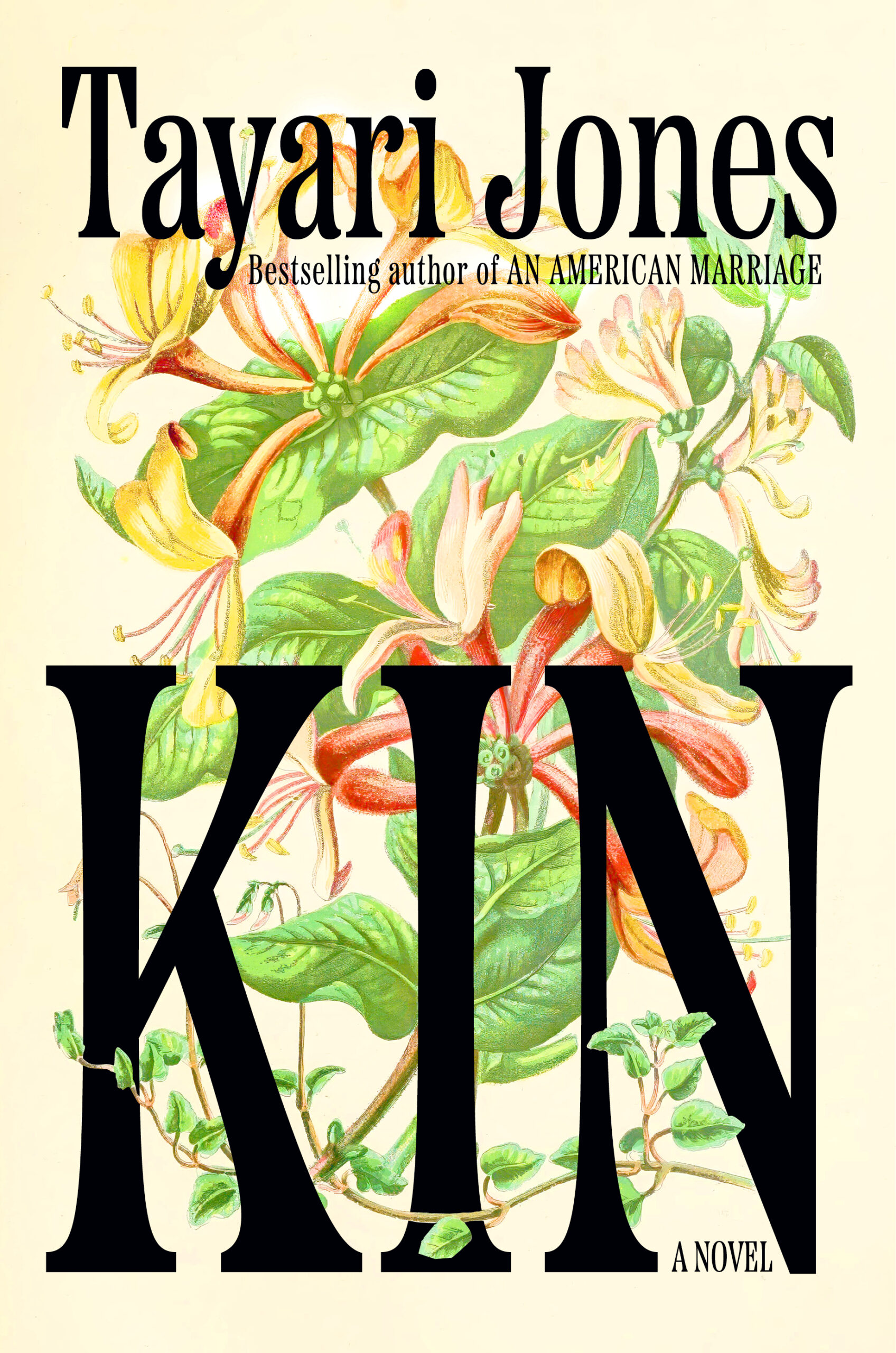
Our bookshelf pick this month is Kin by Tayari Jones, a powerful and emotionally rich novel about friendship, sisterhood, family, and the bonds that endure across distance and time. Set in Honeysuckle, Louisiana, the story follows Vernice and Annie, two motherless girls who grow up as close friends before their lives take them in very different directions. Vernice leaves for Spelman College in Atlanta, while Annie sets out on a journey to find the mother who abandoned her, leading both women into experiences that shape their identities, relationships, and understanding of the world around them.
Both intimate and expansive, Kin explores the complexities of Black womanhood, motherhood, chosen family, and the enduring effects of race and inequality in the American South. Through the intertwined journeys of Annie and Vernice, Jones captures the strength found in sisterhood and the people who step forward to become family when others cannot. Set against the social realities of the Jim Crow South and the changing landscape of the Civil Rights era, the novel offers a deeply human portrait of two women navigating love, loss, independence, and belonging. Thoughtful, moving, and deeply rooted in the power of connection, Kin is an evocative read for anyone interested in contemporary Black literature, Southern history, and the enduring bonds that define family.
Creative AF is our monthly nod to the culture-shapers, boundary-pushers, and vision-bearers whose work makes us pause, move, and think.

Walter Thompson-Hernández is an author, journalist, and filmmaker whose work explores identity, culture, family, community, and the complexities of Black and Latino life in Los Angeles. Through immersive storytelling and cultural reporting, he examines the intersections of race, place, belonging, and imagination, bringing attention to communities and perspectives that are often overlooked. His work spans journalism, nonfiction, and film, allowing him to explore personal and social histories through intimate, deeply observed narratives.
His debut book, The Compton Cowboys: The New Generation of Cowboys in America’s Urban Heartland, documents a group of Black cowboys in Compton, California, exploring their relationships with horses, the legacy of Black equestrian culture, and the role of community in navigating adversity. His storytelling extends into filmmaking with If I Go Will They Miss Me, his feature directorial debut and an expansion of his Sundance-winning short film of the same name. Set in Los Angeles’s Watts neighborhood, the film follows a twelve-year-old boy whose imagination transforms the world around him as he struggles to reconnect with his father after his return from prison. Inspired in part by Thompson-Hernández’s own childhood experiences beneath the flight paths of LAX, the film explores fatherhood, absence, community, spirituality, and the emotional and imaginative ways people make sense of home.
Thompson-Hernández’s journalism has appeared in The New York Times, NPR, The Guardian, and other publications, where he has reported on communities, culture, and identity across the United States and beyond. His work as a filmmaker builds upon that journalistic perspective while embracing imagination, mythology, and visual storytelling. In If I Go Will They Miss Me, airplanes become a recurring symbol of both physical and emotional flight, reflecting the dreams of a young boy growing up in Los Angeles while also confronting the realities of his environment. Across his writing and filmmaking, Thompson-Hernández continues to create space for nuanced stories about family, place, resilience, and the expansive possibilities of Black and brown life.
California African American Museum (CAAM)
The California African American Museum (CAAM) is a vital space for art, history, education, and community in the heart of Los Angeles’ Exposition Park. Founded in 1977, CAAM was established through the efforts of community activists, artists, and civic leaders who sought to create an institution dedicated to preserving and celebrating the African American experience in California and the American West. Today, the museum connects audiences to the diverse stories, artistic achievements, and cultural contributions of African Americans across generations.
Through exhibitions, its permanent collection, educational initiatives, and public programs, CAAM explores African American life through art, history, and contemporary culture. Its collection of more than 5,000 objects includes paintings, sculptures, photographs, mixed-media works, historical artifacts, and other materials that highlight the experiences and creative practices of African American artists. While its primary focus is California and the American West, the museum places these stories within the broader context of the African American experience and the African diaspora.
Located within Los Angeles’ renowned Exposition Park, CAAM serves as both a cultural institution and a gathering place for learning, dialogue, and discovery. Its exhibitions and programs create opportunities to examine themes of identity, representation, community, social change, and cultural expression while highlighting the distinct histories and contributions of Black communities throughout California and the West. Through art, historical materials, and community engagement, CAAM celebrates African American creativity and achievement while encouraging visitors to consider the continuing influence of Black history and culture on California and the broader American story.
📍Los Angeles, CA
https://caamuseum.org/